Preamble
Timetabling data that exists in E10 timetable files are usually sent on to one or more other non-Tes systems, such as student learning management systems, reporting systems, administration systems, and many more. The Tes integration team works with other systems to make sure that the data required to be sent is in the correct format. This document outlines the synchronisation process to Active Directory distribution lists.
Before you sync to Active Directory you must make sure that in the the E10 timetable>Classes>Class data that everything is added in the class data such as subject name, the teachers, assigned room lines and so on, there should be no blank column in the Class data..
Type of sync
E10 and Active Directory distribution lists integrate via flat file. E10 outputs the following .csv files for Active Directory distribution lists to import:
- classmembership.csv
- classteachers
Which data is sent to the other system?
This table lists many of the data and features found in Tes and, where known by Tes specialists, whether they are also understood by the other system.
Note that Tes builds many excellent features to help users build high quality timetables, and while these features can be sent onto the other system through the synchronisation process, not all systems have built the capability on their end to receive/display these feature.
| Tes feature | Notes on feature | Is this feature received by the other system? | Other notes |
| Bell times | Bell times as per Grid structures | No | |
| Campuses | Campuses and their associated rooms | No | |
| Classes | Class Code, Subject name | Yes | Classes without teachers assigned will not appear |
| Class lists | Yes | ||
| Composite classes (linked classes) | One teacher teaching more than one class at the same time | No | |
| Duty roster | Yes | ||
| Faculty data | Yes | ||
| Grid structure codes | No | ||
| Multi-file | Two (or more) timetable files | No | |
| Multi-grid | Multiple grids with different bell times | No | |
| On-call roster | Yes | ||
| Priority classes | The priority class that shows on student's timetables where they have class clashes | No | |
| Room data | Room Code | No | |
| Rotation classes | Classes from particular rotations | No | Only the current rotation |
| RTO roster | Yes | ||
| Student data | Student Code, Name, Year level, Letter group, House, Gender | No | |
| Study roster | Study classes, staffing and rooming roster | Yes | |
| Sub-classes | Yes | ||
| Teacher data | Teacher Code, Name | Yes | |
| Teacher days off (Unavailable) | No | ||
| Timetable data | No | ||
| Two (or more) rooms at once | No | ||
| Two (or more) teachers at once | Yes | ||
| Year levels (non-numeric) | Year levels such as SPT, LSUP, ROLL, Yr9+10 etc.. | Yes |
Step 1: Configure the Active Directory distribution lists sync export
Make sure that your region in 'Setup > School info > Admin' is set to your correct region and not 'Unknown' or 'Other'.
The Active Directory distribution lists sync will not appear in sync drop-down if the incorrect region is selected
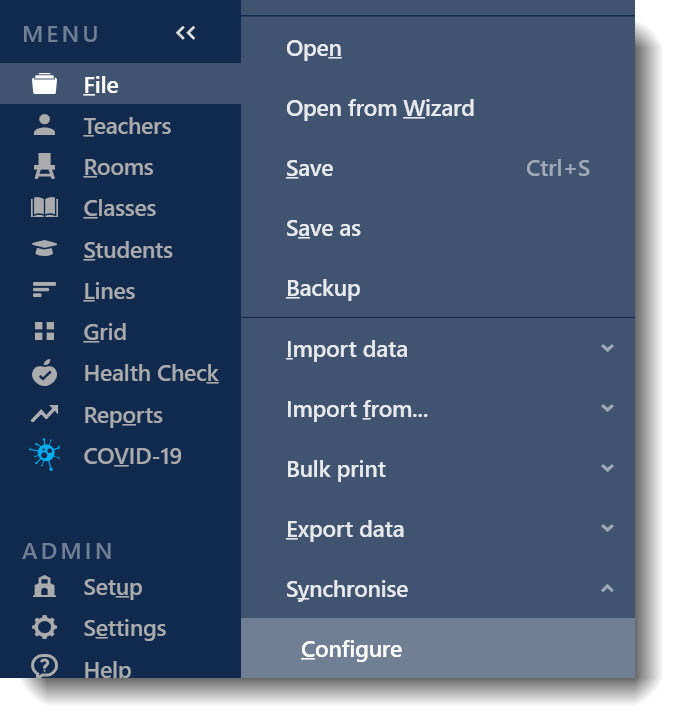
- In Tes, select File > Synchronise > Configure
- In the Configure tab, select 'Active Directory distribution lists' from the drop down list of options.
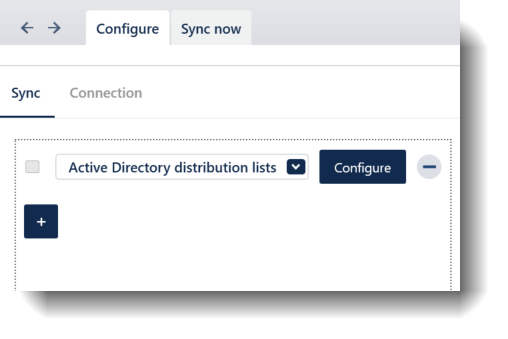
Multiple systems can be set up to sync. It is common to have both the Edval webserver, the schools learning management system configured, along with any other systems the school wishes to regularly sync to.
- Select the Configure button, which will move you to the Connection tab. A destination folder must be selected to direct where the .csv files will be saved to. Select Browse and locate or create the desired location.
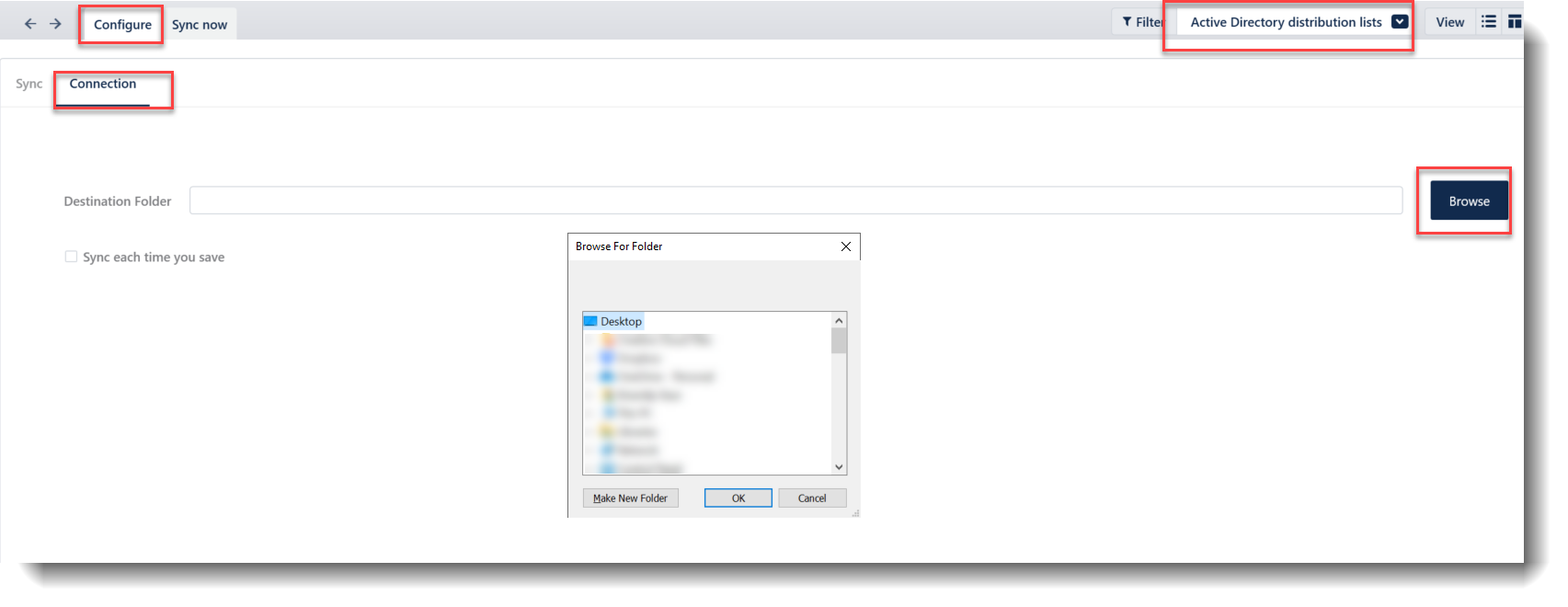
'Sync each time you save' - This means the sync will occur automatically on a ctrl-S save. In this case, data is first saved locally to disk, and then an attempt is made to sync with all external systems. This is simple, but you may want to disable this if the external systems or your network is slow to sync, or you want more control about 'when' you publish data through to other systems. No message is shown on a sync-on-save, as it is done quietly. Only active sync via menu/ctrl-K will show a completion message.
Step 2: Perform the sync
The following steps will be performed each time new data is to be sent to Active Directory distribution lists:
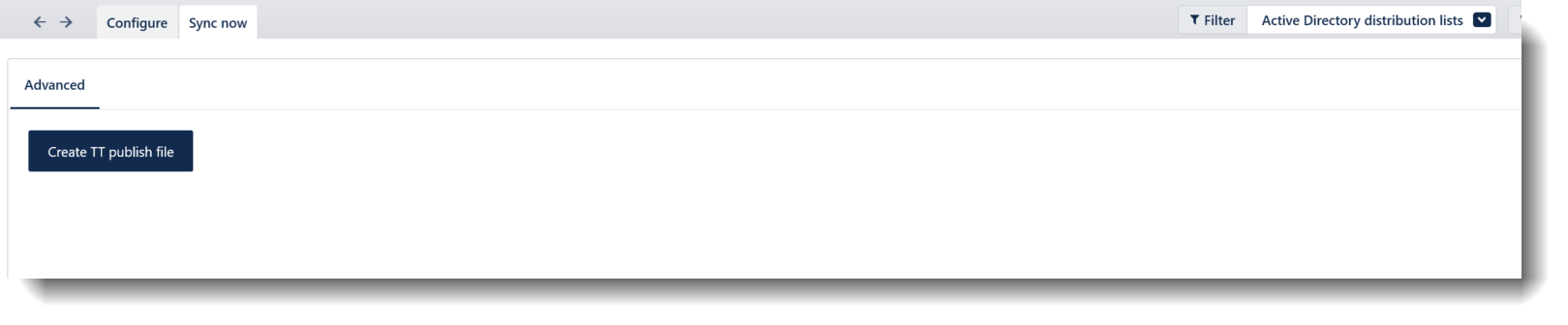
- Navigate to File > Synchronise > Sync now.
- Select / ensure that the Active Directory distribution lists option is chosen in the Filter menu on the top right.
- Select 'Create TT publish file'
A number of files will be created which will be used to import into Active Directory distribution lists:
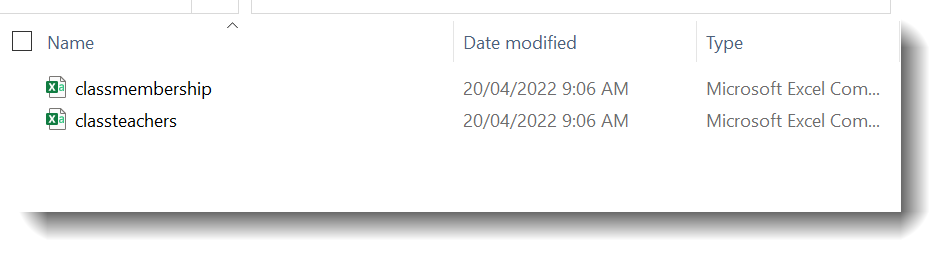
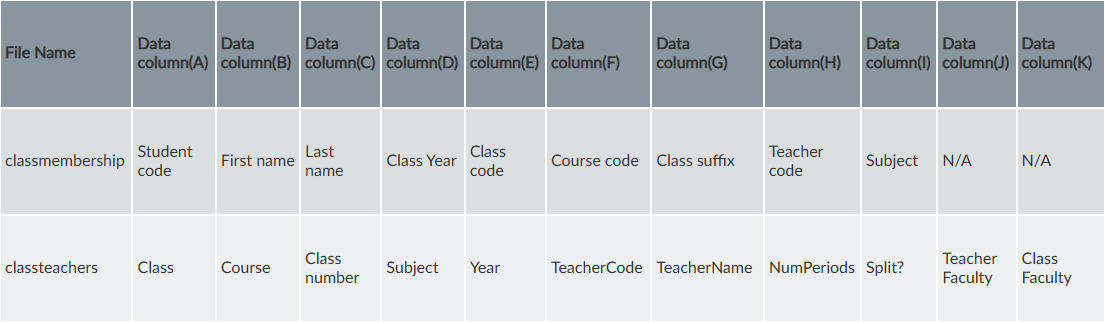
The table below details what type of data each CSV file consists of when exported:
Was this article helpful?
That’s Great!
Thank you for your feedback
Sorry! We couldn't be helpful
Thank you for your feedback
Feedback sent
We appreciate your effort and will try to fix the article